

The recent release of nearly one terabyte of scientific data from the Artemis II mission has provided the public with an unprecedented look at the lunar surface. As the first crewed mission to return to the vicinity of the Moon in over half a century, the massive trove of moon science has captivated researchers and the general public alike. While the primary objectives centered on lunar geology and radiation mapping, independent analysts are now scrutinizing high-resolution imagery to investigate color variations within deep-shadowed craters.
These observations arrive at a critical juncture in space exploration, as NASA continues to emphasize transparency through the Artemis Accords. While official reports categorize these color variations as complex mineralogical signatures, the persistence of these hues in areas shielded from direct solar radiation has invited broader scientific debate regarding the composition of the lunar regolith and the potential for subsurface phenomena.

Image: NASA — Riccioli Crater: Cracked, Melted, and Draped
→ Analyzing the Chromatic Anomalies in Lunar Craters
The full lunar dataset contains thousands of images of craters; some researchers are analyzing these for variations in color and composition. Standard mineralogical models of the Moon generally account for variations in grey, white, and occasional reddish tones due to iron and titanium oxidation. However, the study of variations in lunar imagery has prompted researchers to query whether current lunar geology models are sufficient.
Some independent researchers suggest that these hues could represent localized concentrations of rare earth elements or unusual sub-surface moisture interactions, though no official confirmation of such a phenomenon exists. Meanwhile, the conversation surrounding NASA's Artemis II mission and potential UAP monitoring continues to grow. If these hues are indeed reflective of anomalous surface conditions, understanding their origin is essential for future crewed landings and the establishment of long-term infrastructure.
→ The Intersection of Lunar Geology and UAP Disclosure
The investigation into these anomalies aligns with a broader interest in the Moon as a potential site for non-human intelligence activity. For years, whistleblowers and independent researchers have posited that the lunar surface may hold artifacts or structures that remain largely unacknowledged by official space agencies. While NASA maintains that its mission is purely scientific, the sheer scale of data released allows for a new era of crowdsourced verification.
Researchers analyzing the Artemis II science data have noted that the mission provided critical insights into meteoroid impacts and crater formation. If some of these 'colorful craters' are found to be inconsistent with known impact physics, it could provide the necessary evidence to shift the narrative regarding lunar anomalies. Currently, the most prominent theories include:
- Localized mineral deposits: Unusual concentrations of titanium or iron that refract light differently in low-angle, deep-shadow conditions.
- Subsurface outgassing: Potential transient lunar phenomena involving the release of trapped gases that alter the surface appearance.
- Instrument calibration artifacts: The possibility that the imagery reflects specific sensor responses during the high-radiation environment of lunar orbit.
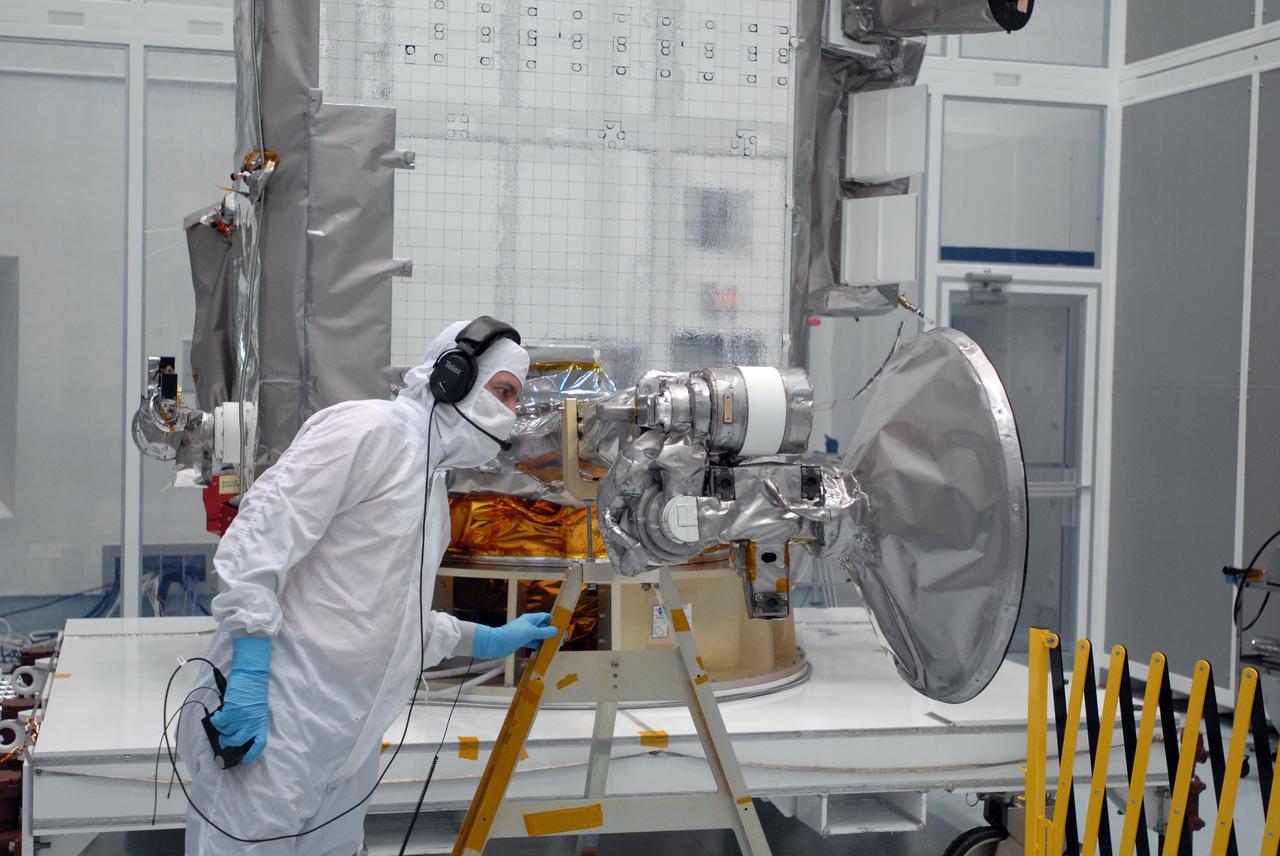
Image: NASA — KSC-2009-2679
→ Future Implications for Artemis III and Beyond
As NASA prepares for future missions, the focus remains on leveraging the data acquired by the Artemis II crew to ensure mission safety. The data methodology challenge winners have already begun refining how we process these massive image sets, which may eventually provide clarity on the anomalous hues observed. Whether these colors are merely a trick of the light or a sign of something more profound, the commitment to open-source data analysis is a victory for transparency.
The ongoing study of lunar anomalies remains a cornerstone of modern space research. As we look toward the potential for advanced propulsion systems and extraterrestrial contact, the Moon serves as the most accessible laboratory in our solar system. The mission to understand the Moon is not only about geology; it is about uncovering the history of our celestial neighborhood and preparing for the possibility of encountering non-human phenomena in our own cosmic backyard.